
Overview
Bone grafting is a surgical procedure crucial technique in dental implantology which replaces missing or damaged bone. It is used to rebuild and strengthen jawbone structure where bone volume is insufficient. This procedure involves adding bone material to areas with low density and creates the solid foundation necessary for successful implant placement.
Commonly used in the upper jaw, especially in the sinus regions , bone grafting enables precise implant positioning and increases long-term stability. By enhancing bone quality and volume, grafting not only supports the immediate success of implants but also offers future flexibility for additional implants if needed; making it an essential step for patients with compromised jawbone integrity.
What is Bone Grafting?
Bone grafting is a way of rebuilding parts of the jaw that are too thin to give dental implants lasting support. With All-On-4 Plus®, it's not used in every case. It is added when the bone you have will take implants yet still falls short of what those implants will need.
Missing teeth, years in dentures, or damage from gum disease and infection can leave the jaw thinner than it once was. Without the load that natural teeth once applied, the bone slowly shrinks. Active infection can accelerate that bone loss.
You may still have enough bone for implants to go in on the day of surgery. But that does not always mean there is sufficient support for those implants to stay sound for many years. Bone grafting fills the thin areas so new bone can form around the material and thicken the ridge. We see this requirement most often in the upper jaw, beside the sinuses.
How it's used in All On 4 Plus® Treatment
The shortfall of jawbone support is the point at which grafting enters an All-On-4 Plus® plan. Rear implants are already angled to use the bone that remains, and the jaw surface is levelled during surgery for your new teeth to sit cleanly. When the remaining bone is still short of what we want, especially near the sinus, we place a graft in the same operation as the implants.
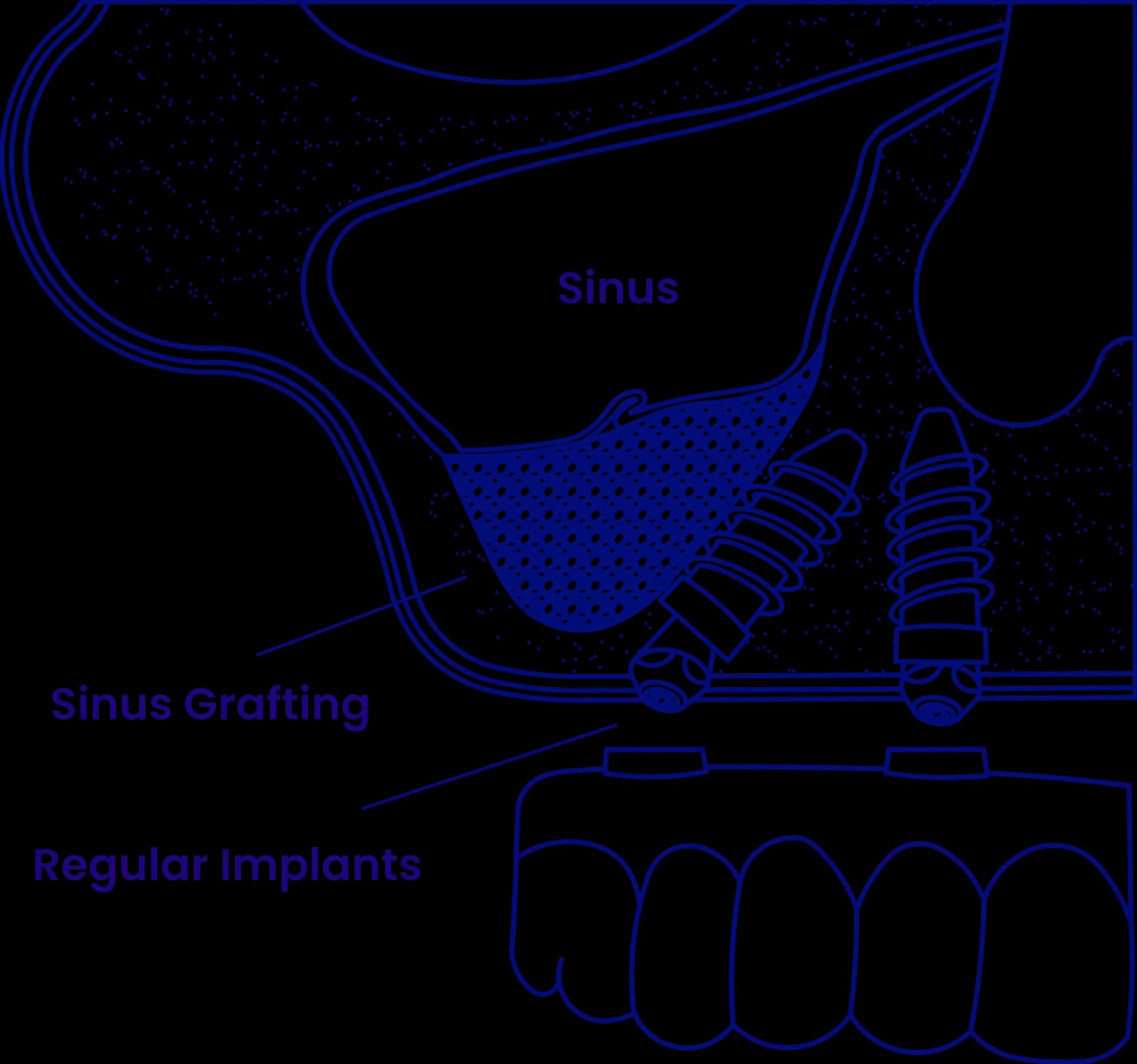
A sinus lift raises the sinus lining from inside the mouth. The bone graft goes in the space created under that lining. This all happens in one visit. Grafting can run with standard implants or with zygomatic implants in harder cases. The extra bone lets us set each implant more exactly. Comfort and appearance improve when the fixtures are in the right place, as does the chance they will hold.
Learn More about Bone Grafting
Learn from Dr Alex Fibishenko about bone grafting and if it may be an option for you.
Regular Dental Implants with Sinus Grafting
Bone grafting for regular implants is typically used in the upper jaw to restore bone volume, especially in the sinus areas. This process often occurs alongside implant surgery when there’s a need to rebuild bone, helping to ensure a solid foundation for implants. By increasing bone volume, grafting allows for optimal positioning and stability of the implants, enhancing their longevity and effectiveness. Additionally, this procedure can create more contingency by increasing available bone, offering more implant options in the future if needed. Bone grafting supports a strong and stable foundation, ultimately improving the success and durability of implants.
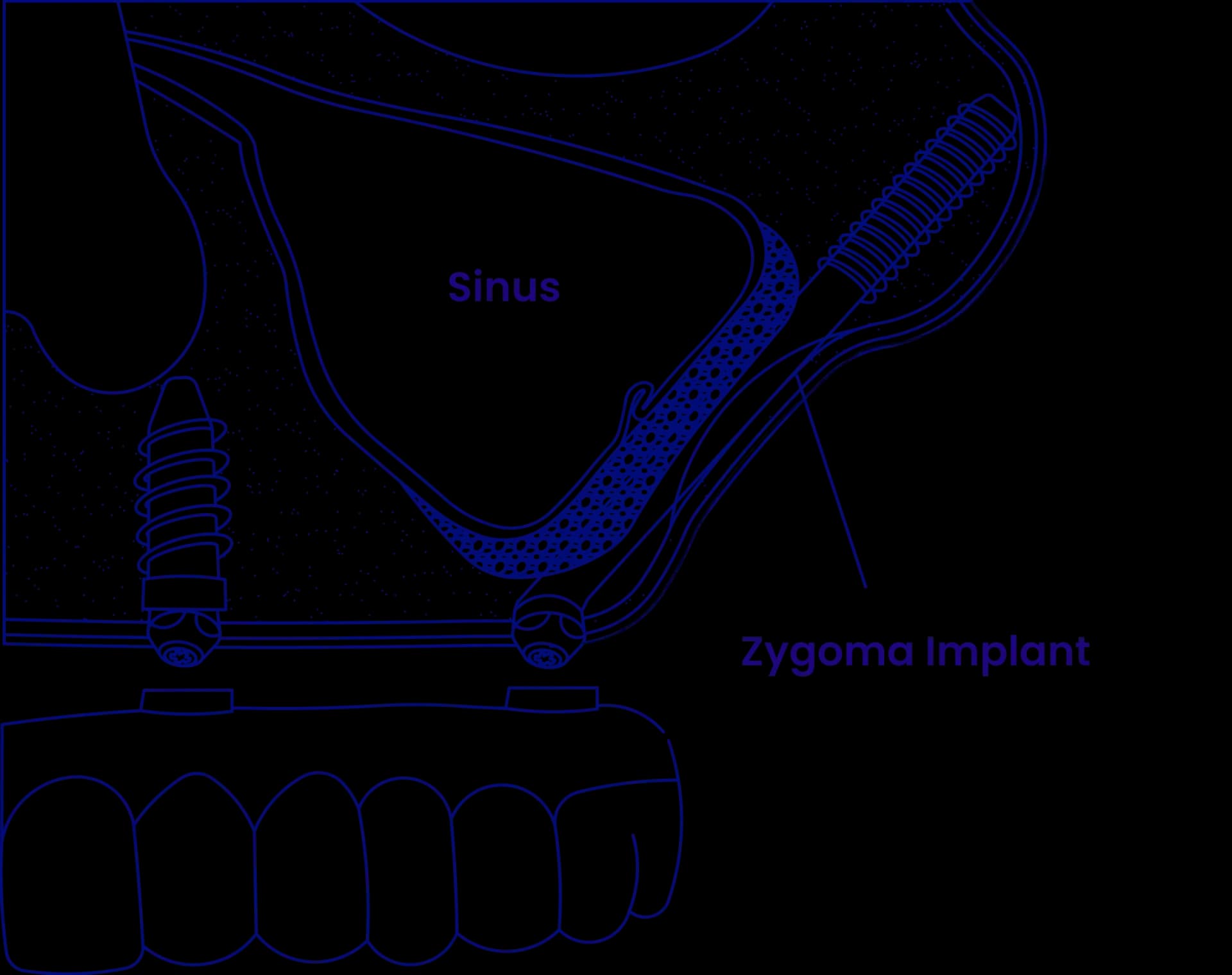
Zygoma Implants with Zygoma Grafting
In cases of severely limited jawbone structure, zygoma implants paired with bone grafting provide an alternative approach. This advanced technique uses the zygomatic (cheek) bone for implant anchoring, bypassing areas with insufficient bone in the upper jaw. When required, bone grafting can further reinforce areas around the zygoma implants, ensuring improved structural support. This method is especially beneficial for patients with extreme bone loss, offering a solution where conventional implants and grafting may not be feasible. By strengthening the jaw's foundation, zygoma implants with grafting deliver a reliable and stable option for patients with complex bone conditions.
Who It May be Suitable For
All-On-4 Plus® grafting is most useful when your sinus has dropped and left little height at the back of the upper jaw. A graft in that sinus space can let us set the implants farther apart, enabling the bridge to carry a full run of teeth instead of a shorter arch.
Every mouth is judged based on its own scans. Since the height and width on the left side of your jaw can differ from the right side of it, bone grafting may be necessary on one side only. Some people need zygomatic implants because the upper jaw is badly worn down. Those individuals can still have graft material placed around the longer fixtures when it will add functional support.
*Suitability is determined by a clinical assessment by one of our dentists
Types of Material Used for Bone Grafting
At our dental clinics across Australia, the graft we most commonly use is sterile artificial or bovine bone, supplied ready to place. Taking bone from another part of your body, or even from the same jaw, introduces a second wound. That harvested bone can also be poor in quality or already contaminated. Ready-made particles avoid both of those issues.
Artificial and bovine grafts have more than 20 years of scientific research behind them and work well when the method is correct. As your own bone grows through the particles, both the amount and the density of the ridge improve. The added bone from grafting can also leave space for further implants later if your bite ever needs them. Grafting in All-On-4 Plus® is not a default step, nor is it a different dental treatment. It is one method we can build into the same plan when your remaining jawbone is not quite enough to support implants long-term.
FAQs
Answers to the questions we're often asked. If you'd like to discuss anything further, get in touch with our team.
Yes, bone grafting often occurs alongside implant surgery when there’s a need to rebuild bone, helping to ensure a solid foundation for implants. By increasing bone volume, grafting allows for optimal positioning and stability of the implants, enhancing their longevity and effectiveness.
In cases of severely limited jawbone structure, zygoma implants paired with bone grafting may be effective.
This advanced technique uses the zygomatic (cheek) bone for implant anchoring, bypassing areas with insufficient bone in the upper jaw. When required, bone grafting can further reinforce areas around the zygoma implants, ensuring improved structural support.
This method is especially beneficial for patients with extreme bone loss, offering a solution where conventional implants and grafting may not be feasible. By strengthening the jaw's foundation, zygoma implants with grafting deliver a reliable and stable option for patients with complex bone conditions.
The most common materials used for bone grafting are artificial or bovine bone. This avoids having to take bone from other parts of the body or the jaw.
Yes. Bone Grafting can be done during your All On 4 Plus® Surgery. You may also need a seperate graft- depending on the type of treatment you are having.