
Architecting a New Standard in Implant Dentistry: Insights from Forbes
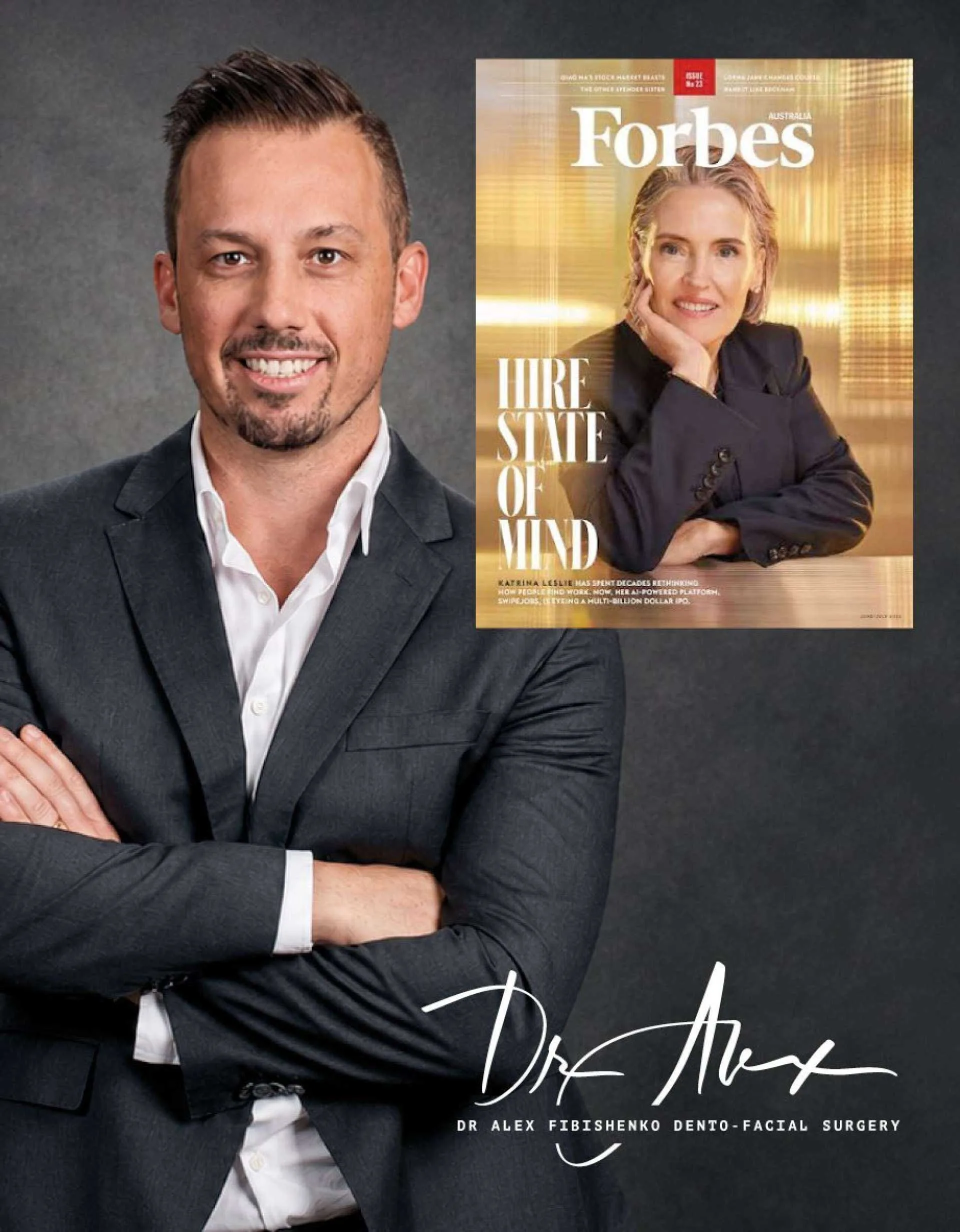
Recently, Forbes Australia featured our own Dr. Alex Fibishenko in an exclusive profile titled "Architect of a new standard in implant dentistry." The piece highlighted his career-long mission to make full-arch implant rehabilitation more predictable, accessible, and scientifically sound.
While the article touches on Dr. Fibishenko’s early inspirations, the core of the feature delves into the actual clinical protocols that are transforming implantology. For dental professionals and patients alike, the Forbes piece provides a valuable look at how modern methodologies are moving beyond outdated, inconsistent methods.
Here is an educational breakdown of the clinical advancements and new standards discussed in the feature.
The Problem with the Traditional Two-Stage Approach
Historically, full-arch restorations relied on a two-stage protocol. After the initial implant surgery, patients were required to wear temporary teeth for several months while the implants healed and integrated with the jawbone.
As discussed in the feature, Dr. Fibishenko identified this extended healing phase as a major source of clinical complications:
- Biomechanical Overload: Temporary restorations are inherently fragile. If they crack or break under the pressure of chewing, it can disconnect individual implants from the supporting bridge, leading to localized mechanical overload and potential implant failure.
- Tissue Inflammation: The rougher acrylic surfaces of temporary teeth easily accumulate plaque and debris. Over a period of months, this can lead to significant localized inflammation and irreversible gum recession around the implant site.
The Shift to "Immediate Final Teeth"
To mitigate the risks associated with temporary restorations, Dr. Fibishenko developed the All-On-4 Plus system, which shifts the protocol away from temporary prosthetics entirely.
The new standard prioritizes the fitting of refined, permanent restorations—what he calls "immediate final teeth"—within 24 hours of the initial surgery. By bypassing the traditional months-long temporary stage, the biomechanical burden on the implants is drastically reduced during their most vulnerable healing phase. Furthermore, the surrounding gingival tissues are allowed to heal around a smooth, permanent structure, ensuring better long-term tissue health and minimizing plaque retention.
Building a Standardised Treatment Ecosystem
Delivering this high standard of care consistently requires more than just a single surgeon's advanced skill. The Forbes feature highlighted that the real innovation is the creation of a comprehensive "treatment ecosystem."
To ensure that patients receive the exact same quality of care regardless of which clinician they see, the methodology integrates four key pillars:
- Digital Planning: Utilizing advanced 3D imaging to map the exact placement of implants before surgery begins.
- Surgical Precision: Employing strictly standardized clinical and risk-profiling protocols to minimize variability.
- Prosthodontics: Ensuring the functional and aesthetic design of the teeth aligns perfectly with the patient's natural bite.
- Laboratory Manufacturing: Synchronizing the dental lab with the surgical team so that final restorations can be milled, finished, and fitted within that critical 24-hour window.
Expanding Treatment to Complex Cases
A defining feature of this integrated approach is its application for high-risk, complex cases. In the past, individuals suffering from severe gum disease, extensive decay, trauma, or failing dental work were often told they were unsuitable candidates for implants.
Today, the combination of advanced risk-profiling, stronger permanent restorations, and highly integrated surgical-laboratory workflows allows specialists trained in these protocols to offer predictable solutions where traditional methods fall short.
The Future of Implantology
As highlighted by Forbes, the overarching goal of modern dental reconstruction is clear: make full-arch treatments safer and highly predictable. By moving away from the vulnerabilities of temporary teeth and embracing a fully integrated clinical workflow, our team is proud to be at the forefront of delivering faster, more reliable outcomes that permanently improve both oral function and quality of life.