
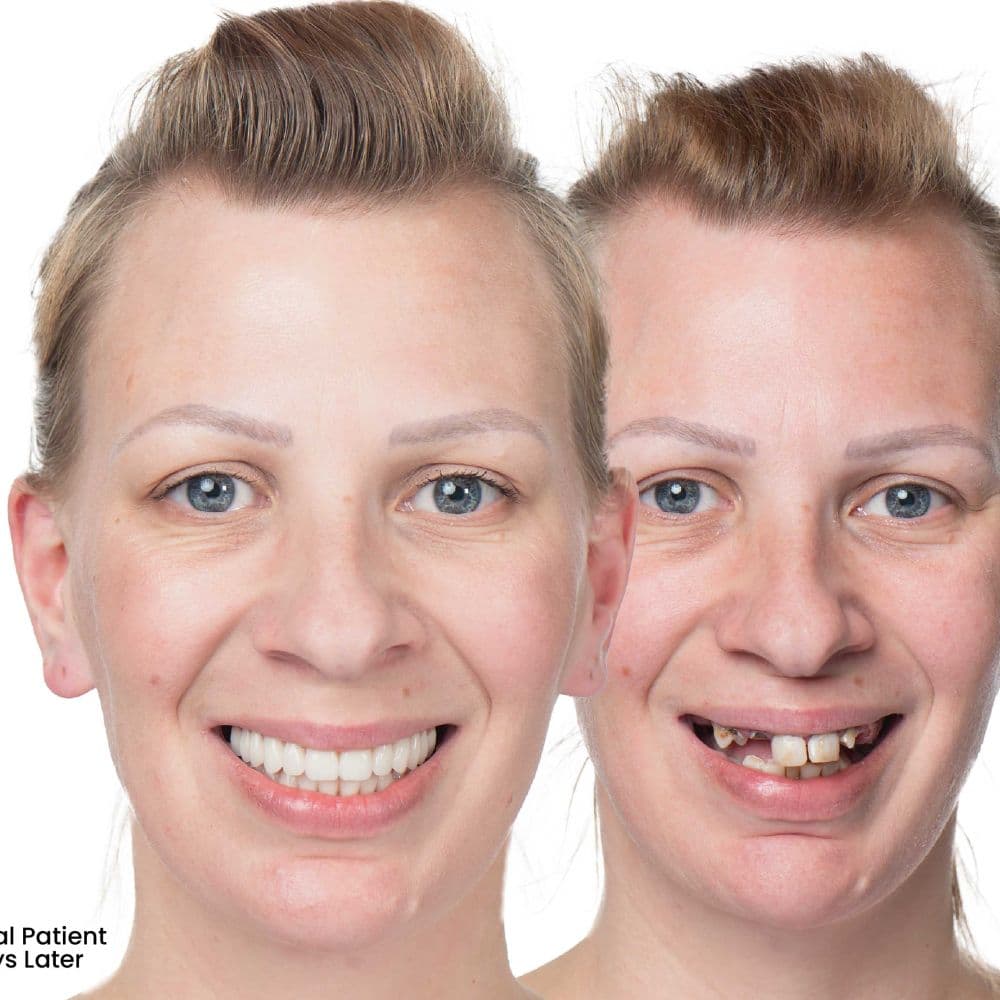
All On 4 Plus® Treatment
Candidacy & Suitability
Whether you are frustrated with loose dentures or facing the loss of failing teeth, All On 4 Plus® may be your ideal solution. This procedure is specifically designed for patients with bone loss who were previously told they weren't candidates for traditional implants. We conduct a thorough assessment to ensure your oral health and bone structure are a perfect match for the treatment.
Whether you are frustrated with loose dentures or facing the loss of failing teeth, All On 4 Plus® may be your ideal solution. This procedure is specifically designed for patients with bone loss who were previously told they weren't candidates for traditional implants. We conduct a thorough assessment to ensure your oral health and bone structure are a perfect match for the treatment.
Advanced Solutions (Complex Bone Loss)
View Guideexpand_circle_right
Zygomatic Implants
Zygomatic Implants is a dental implant solution for severe bone loss in the upper jaw. These implants are longer than standard dental implants which rely on the transverse the poor area of your upper jaw to anchor into the underside of the cheekbones from the inside through the sinus space.
Pterygoid Implants
An option for severe upper jaw bone loss is All-on-4 Plus® Pterygoid implants. Often this solutions can work where traditional methods fall short. These longer implants anchor into stronger bone areas allowing the dental provider to achieve a stable, fixed outcome.
The "Plus" Difference
The “Plus” difference refers to enhancements in planning, materials, and surgical techniques designed to improve stability, comfort, aesthetics and long-term outcomes compared to traditional approaches.
Bone Grafting
Bone grafting is a crucial technique in dental implantology. It is used to rebuild and strengthen jawbone structure where bone volume is insufficient.
Biological Integration
Biological integration (also known as osseointegration) is the process by which your jawbone naturally bonds with a dental implant. This creates a stable and long-term foundation that supports fixed replacement teeth.
The Clinical Assessment Process
View Guideexpand_circle_right
What to Expect at Your Initial Consultation
Your initial consultation is the diagnostic phase of the All-On-4 Plus® treatment process. It includes a comprehensive oral examination, a review of your medical history and 3D CBCT imaging to gather the clinical information required for treatment planning.
Is There an Age Limit for Dental Implants?
There is no strict upper age limit for dental implants. Suitability for All-On-4 Plus® treatment is usually based more on bone quality, healing capacity, overall health and individual clinical assessment than age alone.
Why Second Opinions Matter
Seeking a second opinion provides an opportunity to gather all the facts and understand your personalised treatment plan before proceeding with invasive surgery. It also provides an opportunity to compare treatment recommendations, costs and clinical approaches before making a decision.
Transitioning Based on Your Current Smile
View Guideexpand_circle_right
Upgrading from Removable Dentures to All-On-4 Plus®
All On 4 Plus® replaces loose dentures with a fixed set of teeth that never slip. Unlike standard dentures, this system uses titanium implants to lock your new smile in place, often bypassing the need for large bone grafts. This approach is designed to restore your ability to eat, speak and smile with total confidence.
Terminal Dentition (Failing Teeth)
Many Australians live with missing teeth whether from decay, gum disease, failed dental work, injury or long-term denture use. Missing teeth can affect your ability to eat, speak or feel confident in everyday life. The good news is that there are effective & permanent solutions.
Severe Periodontal (Gum) Disease
Gum disease is caused by the accumulation of plaque on the root surfaces of the teeth leading to inflammation and infection in the gums. It can be hereditary but is usually caused by insufficient cleaning. Ultimately, this results in loss of supporting jawbone and loose teeth.
The Impact of Smoking on Implant Success
Smoking is a recognised risk factor for dental implant treatment because nicotine can reduce blood flow, slow bone healing and increase the risk of implant failure. During your consultation, your clinician will assess your smoking status along with other clinical factors as part of the clinical assessment and treatment planning process.
Diabetes and Jawbone Healing
Properly managed blood sugar levels play an important role in osseointegration, the process by which an implant bonds with the jawbone. During your clinical assessment, your clinician will consider your diabetes management alongside other health factors as part of the clinical assessment and treatment planning process.
Medications and Implant Surgery
Certain medications should be disclosed to your surgeon before considering All-On-4 Plus® treatment. This is particularly important for bisphosphonates, which may be used for osteoporosis.